
Questions regarding specific wildlife species? Please see: http://www.humanesociety.org/animals/wild_neighbors/
Wildlife conflicts - Proceed with caution when seeking a professional…
Traditional “pest control” companies often try to resolve wildlife “intrusion” problems by treating the symptoms rather than the problems. For instance, when a pest control operator removes a squirrel from your attic but fails to seal the squirrel’s entry holes, he simply leaves a cozy future nesting site for yet another squirrel.
This type of “quick-fix” – although touted as “humane removal” - often has dire results for the animals once removed off-site. Live-trapping and relocating wildlife is another “quick-fix” that doesn’t treat the underlying problems and often has dire results for the relocated animals who are unfamiliar with the location of available food sources and safe den sites. Relocated mammals are further disadvantaged when routinely chased out of these unfamiliar areas by resident animals who instinctively protect their territories from newcomers. Equally important, relocation may encourage disease transmission and is illegal in some states.
Preventing Intrusions
It can be a challenge to deal humanely with wildlife conflicts, but long-lasting benefits result when we change our thinking and refuse to accept inappropriate and environmentally irresponsible ways of dealing with wildlife conflicts. Many people are afraid of a wild animal, such as a raccoon or coyote, on their property. However, educating yourself about the natural behavior of wildlife helps you to determine if there is cause for concern.
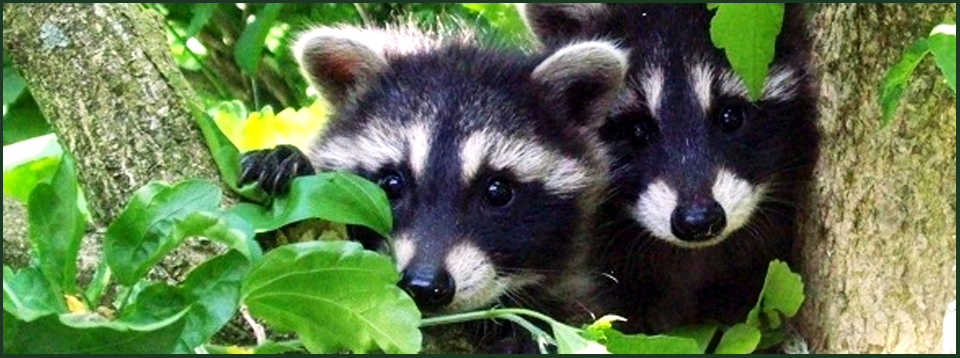
Understanding a species’ natural behavior increases the success of permanent removal. Most complaints from people occur during the animals’ birthing season. For example, you may discover a raccoon with her babies in your attic. The mother animal purposely sought out a dark, quiet, peaceful environment to raise her young. Creating an inhospitable environment through the use of lighting, noise, and odors that are obnoxious and offending to wild animals persuades the mother to find a more suitable location in which to raise her family.
Once an animal has determined the environment is no longer conducive for family rearing, all necessary repairs must be made to prevent other animals from moving into this newly vacated niche.
Some of our conflicts with wildlife may be easily avoided if we change our own behavior. Removing food sources that make the location desirable is critical. Curtailing access to all potential den sites will also play favorably at reducing wildlife intrusions. Residents disturbed by raccoons raiding birdfeeders can bring in their birdfeeders at dusk, along with tarps or trays used for catching spilled seeds under the birdfeeders. Garbage cans are open invitations for raccoons or other hungry animals. Taking garbage cans out for pickup in the morning — after nocturnal animals have returned to their dens – is an easy solution. If you must place garbage out for collection in the evenings, tall, plastic garbage cans with twist-on lids are best, as raccoons are unable to gain access to these.
People who intentionally feed wildlife are often unaware that this kindness may be harmful for the animals. Human food sources may be unhealthy for wild animals, and these types of unnatural handouts may result in wild animals growing increasingly dependent on humans for routine meals.
Hiring animal removal services
If you are in the market to hire a wild animal control operator, please consider the following:
Sources of information concerning wildlife conflicts and solutions:
AAA Wildlife Control specializes in exclusionary devices for dealing with wild animals. Visit their Web site at www.aaawildlife.com
SIGN UP FOR OUR NEWS ALERTS
Know what's going on


Please contribute today and help make a difference.